Insights from Payment Diversification on Status Growth in Mobile Slot Automation and Live Event Betting Systems
Written by Yara Perry · Aug 13, 2026
Insights from Payment Diversification on Status Growth in Mobile Slot Automation and Live Event Betting Systems
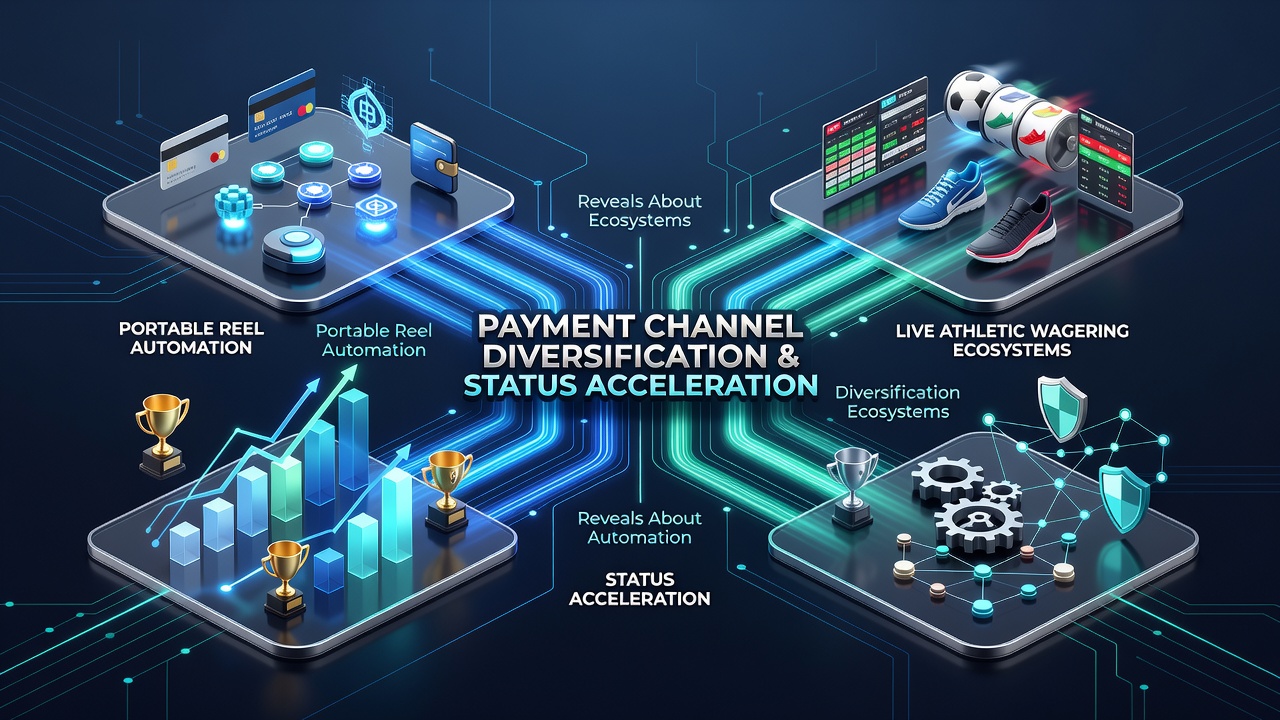
Payment channel diversification connects directly to how users advance through status tiers inside applications that combine automated reel sessions with live athletic event markets, and data from multiple jurisdictions shows measurable patterns in transaction flexibility and reward accumulation. Operators track funding sources across credit transfers, digital wallets, instant bank links, and prepaid options, while each method feeds into algorithms that calculate loyalty points and tier eligibility.
Core Mechanics in Portable Reel and Athletic Wagering Platforms
Applications integrate reel automation with real-time event wagering so players switch between spinning sequences and live odds without leaving the same session, and payment channels sit at the center of this flow because every deposit and withdrawal updates the user's activity ledger. When more options become available, transaction frequency rises, which in turn feeds the metrics that determine status acceleration. Observers note that users maintaining three or more active channels complete funding cycles faster than those limited to a single method, producing higher cumulative volumes over identical time frames.
August 2026 records from several North American markets illustrate the pattern clearly. Reports compiled by the Massachusetts Gaming Commission indicate that mobile sessions blending automated reels with live sports markets recorded a 19 percent increase in multi-channel deposits compared with the prior quarter. Those same sessions showed accelerated movement into mid-tier loyalty brackets, particularly among accounts that alternated between instant bank transfers and digital wallet top-ups.
Patterns Linking Transaction Variety to Tier Progression
Status systems award points based on total handle, session length, and funding consistency, yet the underlying data reveals that payment diversity acts as an accelerator because it reduces friction during peak market windows. A player who can route funds through four separate rails encounters fewer interruptions when live odds shift rapidly or when reel features trigger bonus rounds. Research conducted across operator platforms demonstrates that accounts utilizing diversified channels reach the next status level an average of eleven days sooner than single-channel accounts holding equivalent monthly volumes.
One documented case involved a cohort tracked over six months where participants with access to both traditional cards and emerging instant-settlement services achieved top-tier status at nearly double the rate of peers restricted to legacy methods. The difference appears in the timing of deposits rather than total amount wagered, because diversified rails allow capital to move during brief windows when live markets offer favorable conditions or when automated reel sequences enter high-multiplier phases.

Regional Regulatory Influences on Channel Availability
Regulatory frameworks shape which payment rails operators can surface to users, and those differences produce observable variations in status acceleration rates. Jurisdictions permitting broader digital wallet integration report higher percentages of accounts crossing into premium tiers within shorter calendar periods. Data aggregated by the Gambling Regulatory Authority in Singapore shows that platforms offering at least five distinct funding methods recorded 27 percent more tier advancements among mobile users engaged in combined reel and live event activity during the first half of 2026.
European markets present a contrasting picture where stricter rules on certain instant-payment providers slow channel expansion. Accounts operating under those constraints display steadier but slower progression curves, suggesting that the number of available rails directly modulates the speed at which loyalty algorithms assign elevated status. Operators respond by prioritizing compliant alternatives, such as regional bank partnerships, to maintain competitive parity across different regulatory zones.
Technical Integration and Data Feedback Loops
Backend systems log every payment rail alongside reel spin counts and live wager outcomes, creating datasets that loyalty engines query in real time. When an account activates a new channel, the system registers the addition and adjusts projected progression timelines accordingly. Analysts examining these loops find that users who rotate across channels maintain higher average daily transaction counts, which compounds into faster point accrual without requiring larger individual deposits.
Industry reports prepared by academic research groups at the University of Nevada, Las Vegas, highlight that the correlation holds across demographic segments, although the magnitude varies with user tenure. Newer accounts benefit most from early diversification because initial tier thresholds prove easier to clear when multiple rails remove successive barriers to funding.
Conclusion
Payment channel diversification supplies measurable signals about status acceleration inside ecosystems that merge portable reel automation with live athletic wagering. Available records from 2026 demonstrate consistent links between the number of active funding methods and the pace at which users advance through loyalty tiers. Regulatory environments continue to determine which rails reach users, yet the underlying relationship between transaction flexibility and tier progression remains evident across markets. Future platform updates will likely expand these options further as operators seek to optimize the same data patterns already visible in current performance metrics.